Hereditary Factor X Deficiency (HFXD) Symptoms Can Vary and May Present Across the Lifespan3,7

Prompt diagnosis and appropriate treatment may help prevent permanent impairment or mortality.

In a U.S. survey, 4 years was the mean age at diagnosis of HFXD9

Even people with severe HFXD may be undiagnosed as infants, waiting years for proper diagnosis and treatment.

Real Hereditary Factor X Deficiency patient, John

John

Actual Patient with Severe HFXD
Diagnosed at 1 year of age
Real Hereditary Factor X Deficiency patient, Hazel

Hazel

Actual Patient with Severe HFXD
HFXD first identified by dentist at age 6 years
Real Hereditary Factor X Deficiency patient, Fernando
Name and photo
changed for
privacy.

Fernando

Actual Patient with Severe HFXD
Endured 25 years of pain, bruising, and hemarthrosis before diagnosis as adult when an accident caused an ICH and he was hospitalized

Hereditary Factor X Deficiency Symptoms

Bleed Occurrence in HFXD*7,10

  • Out of 102 people identified with confirmed HFXD, 42 were symptomatic
  • Within the symptomatic group:
    • The most frequent bleeding symptoms observed were easy bruising, 23 (55%), and hematoma, 18 (43%)
    • Of those that experienced an ICH or GI bleed, these occurred within the first days after birth (1-27 days, median 9.7 days)
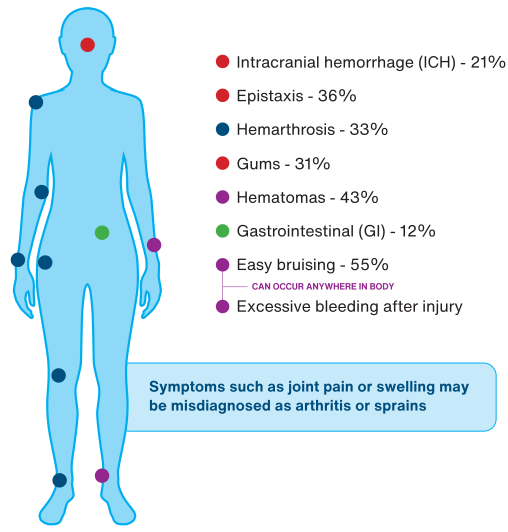
Factor X Deficiency symptoms diagram showing how HFXD can present as intracranial hemorrhage, epistaxis, hemarthrosis, gum bleeds, hematomas, GI bleeds, easy bruising, and excessive bleeding after injury
*Refers to data collected from one series of patients from three Central European and two Latin American countries in a 2006 study; numbers reflect characterization of the 42 symptomatic patients out of 102 total subjects with confirmed reduced FX activity and identified F10 gene causative mutations (<50% of the sample were symptomatic).

HFXD in Special Populations

Bleeding may start at any age and HFXD may create unique problems for special populations7

Neonates3,10

Neonates with HFXD can be at high risk for severe, life-threatening bleeds, including intracranial hemorrhages (ICH).

  • ICH due to HFXD:
    • Occurs most commonly in the neonatal age group
    • Is likely to recur and be spontaneous
    Neonate Factor X Deficiency symptoms diagram showing how HFXD can present as neonatal ICH, abnormal bleeding from the umbilical stump or circumcision site, abnormal bruising or bleeding, and GI bleeding

    Unique signs in neonates

    • Abnormal bleeding from the umbilical stump or circumcision site
    • Abnormal bruising or bleeding
    • Intracranial hemorrhage (ICH)
    • Gastrointestinal (GI) bleeding
Carly, mother of a real Hereditary Factor X Deficiency patient

Carly

Mother of Actual Patient with Severe HFXD
Carly’s child was diagnosed following ICH at birth and had recurrent ICH at 5 weeks, resulting in developmental challenges

Women and Girls11,12

An estimated 1 in 5 women and girls experience heavy menstrual bleeding, and among those, about 1 in 4 have a bleeding disorder. Females face additional bleeding risks as they enter reproductive age:

Female Factor X Deficiency symptoms diagram showing how HFXD can present as menorrhagia (heavy menstrual bleeding) and pregnancy and childbirth complications
  • Menorrhagia
  • Pregnancy and childbirth complications, including:
    • Miscarriage
    • Uterine bleeding
    • Postpartum hemorrhage
    • Preterm labor
Real Hereditary Factor X Deficiency patient, Olivia
Name changed
for privacy.

Olivia

Actual Patient with Severe HFXD
Diagnosed as neonate and clinically managed with the available treatment at the time on prophylaxis until menorrhagia “spiraled everything out of control”
For general guidance only; symptoms in individuals may vary and can occur at any age
References: 1. National Institutes of Health. Doherty T, et al. Bleeding disorders. StatPearls [Internet]. https://www.ncbi.nlm.nih.gov/books/NBK541050/. Updated April 3, 2023. Accessed August 24, 2023. 2. LearnHaem, Haematology made simple. 4 Nov. 2020. Accessed October 2, 2025. https://www.learnhaem.com/courses/coagulation/lessons/normal-haemostasis/topic/the-revised-coagulation-cascade/. 3. Tarantino MD. Haemophilia. 2021;27(4):531-543. doi: 10.1111/hae.14223. 4. Kamal AH, et al. Mayo Clin Proc. 2007;82(7):864-873. 5. Palla R, et al. Blood. 2015;125(13):2052-2061. 6. Menegatti M, Peyvandi F. Thromb Hemost. 2024 Aug 29. doi: 10.1055/s-0044-1789595. Epub ahead of print. 7. Peyvandi F, et al. Blood Reviews. 2021;50:100833. 8. Peyvandi F, Palla R, et al. J Thromb Haemost. 2012;10:615-621. 9. Branchford B, et al. Blood Coagul Fibrinolysis. 2024;35(3):73-81. 10. Herrmann FH, et al. Haemophilia. 2006;12:479-489. 11. Byams V, et al. J Women’s Health. 2022;31(3):301-309. 12. Shapiro A. Expert Opin Drug Metab Toxicol. 2017;13(1):97-104. 13. National Organization for Rare Disorders. Updated June 6, 2023. Accessed October 25, 2024. https://rarediseases.org/rare-diseases/factor-x-deficiency/. 14. Medline Plus. https://medlineplus.gov/genetics/condition/von-willebrand-disease/#synonyms. Updated August 8, 2023. Accessed November 1, 2024. 15. LabCorp. https://www.labcorp.com/tests/086306/factor-x-activity. Accessed November 5, 2024. 16. Peyvandi F, et al. Brit J Haematol. 1998;102:626-628. 17. Peyvandi F, et al. J Thromb Haemost. 2012;10:1938-1943. 18. Srivastava A, et al. Haemophilia. 2020;26(Suppl 6):1-158. doi: 10.1111/hae.14046. 19. Medical and Scientific Advisory Council (MASAC) of the National Bleeding Disorders Foundation. MASAC Document #290. https://www.bleeding.org/healthcare-professionals/guidelines-on-care/masac-documents/masac-document-290- masac-recommendations-concerning-products-licensed-for-the-treatment-of-hemophilia-and-selected-disorders-of-the-coagulation-system. Accessed March 31, 2025. 20. Escobar M, Kavakli K. Haemophilia. 2024;30:59-67.
Replace exactly what's missing

Indications and Usage for COAGADEX

COAGADEX, a plasma-derived blood coagulation factor X concentrate, is indicated in adults and children with hereditary factor X deficiency for:

  • Routine prophylaxis to reduce the frequency of bleeding episodes
  • On-demand treatment and control of bleeding episodes
  • Perioperative management of bleeding in patients with mild, moderate and severe hereditary factor X deficiency

Contraindication for COAGADEX

COAGADEX is contraindicated in patients who have had life-threatening hypersensitivity reactions to COAGADEX.

Important Safety Information for COAGADEX

Allergic type hypersensitivity reactions, including anaphylaxis, are possible with COAGADEX. If symptoms occur, patients should discontinue use of the product immediately, contact their physician, and administer appropriate treatment.

The formation of neutralizing antibodies (inhibitors) to factor X is a possible complication in the management of individuals with factor X deficiency. Carefully monitor patients taking COAGADEX for the development of inhibitors by appropriate clinical observations and laboratory tests.

COAGADEX is made from human plasma and may contain infectious agents, e.g. viruses, the variant Creutzfeldt-Jakob disease (vCJD) agent and, theoretically, the Creutzfeldt-Jakob disease (CJD) agent. No cases of transmission of viral diseases, vCJD or CJD, have been associated with the use of COAGADEX.

In clinical studies, the most common adverse reactions (frequency ≥5% of subjects) with COAGADEX were infusion site erythema, infusion site pain, fatigue and back pain.

Please see complete Prescribing Information for COAGADEX.

You are encouraged to report negative side effects of prescription drugs to the FDA. Visit https://www.fda.gov/medwatch, or call 1-800-FDA-1088.
You may also call Kedrion at 1-866-398-0825 or email US_Medicalinfo@kedrion.com.