Management of Hereditary Factor X Deficiency (HFXD)
The HFXD management approach should be similar to that of hemophilia8,7,18
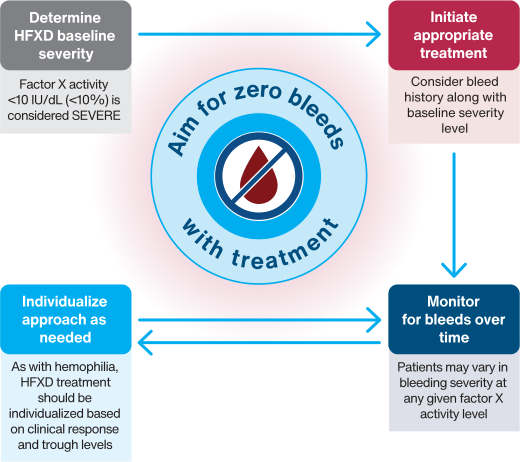
Hereditary Factor X Deficiency Treatment Recommendations
Key insights from hemophilia guidelines may guide the management of HFXD18
Aim for zero bleeds.
- Preventing bleeds in hemophilia can help prevent musculoskeletal damage, pain, and other outcomes including disability or death
Monitor for bleeds over time.
The hemophilia guidelines caution against a “wait and see” approach for bleeds
- Waiting may lead to onset and progression of bleeding symptoms with resulting pain and/or joint damage
- Even a single joint bleed can lead to arthropathy
- Unchecked, hemarthrosis can progress to ultimately manifesting as joint destruction
National Bleeding Disorders Foundation’s* Medical and Scientific Advisory Council (MASAC) recommends single-factor plasma-derived factor X concentrate, the only approved treatment for HFXD19
“Plasma-derived factor X, the first single-factor concentrate approved in the United States and Europe for the treatment of HFXD, is the preferred treatment for patients with HFXD, as it supplies only the necessary coagulation factor required to achieve sufficient haemostasis.”20
Escobar MA, et al.,
Haemophilia, 2024

*Formerly National Hemophilia Foundation (NHF).


Indications and Usage for COAGADEX
COAGADEX, a plasma-derived blood coagulation factor X concentrate, is indicated in adults and children with hereditary factor X deficiency for:
- Routine prophylaxis to reduce the frequency of bleeding episodes
- On-demand treatment and control of bleeding episodes
- Perioperative management of bleeding in patients with mild, moderate and severe hereditary factor X deficiency
Contraindication for COAGADEX
COAGADEX is contraindicated in patients who have had life-threatening hypersensitivity reactions to COAGADEX.
Important Safety Information for COAGADEX
Allergic type hypersensitivity reactions, including anaphylaxis, are possible with COAGADEX. If symptoms occur, patients should discontinue use of the product immediately, contact their physician, and administer appropriate treatment.
The formation of neutralizing antibodies (inhibitors) to factor X is a possible complication in the management of individuals with factor X deficiency. Carefully monitor patients taking COAGADEX for the development of inhibitors by appropriate clinical observations and laboratory tests.
COAGADEX is made from human plasma and may contain infectious agents, e.g. viruses, the variant Creutzfeldt-Jakob disease (vCJD) agent and, theoretically, the Creutzfeldt-Jakob disease (CJD) agent. No cases of transmission of viral diseases, vCJD or CJD, have been associated with the use of COAGADEX.
In clinical studies, the most common adverse reactions (frequency ≥5% of subjects) with COAGADEX were infusion site erythema, infusion site pain, fatigue and back pain.
Please see complete Prescribing Information for COAGADEX.
You are encouraged to report negative side effects of prescription drugs to the FDA. Visit https://www.fda.gov/medwatch, or call 1-800-FDA-1088.
You may also call Kedrion at 1-866-398-0825 or email US_Medicalinfo@kedrion.com.